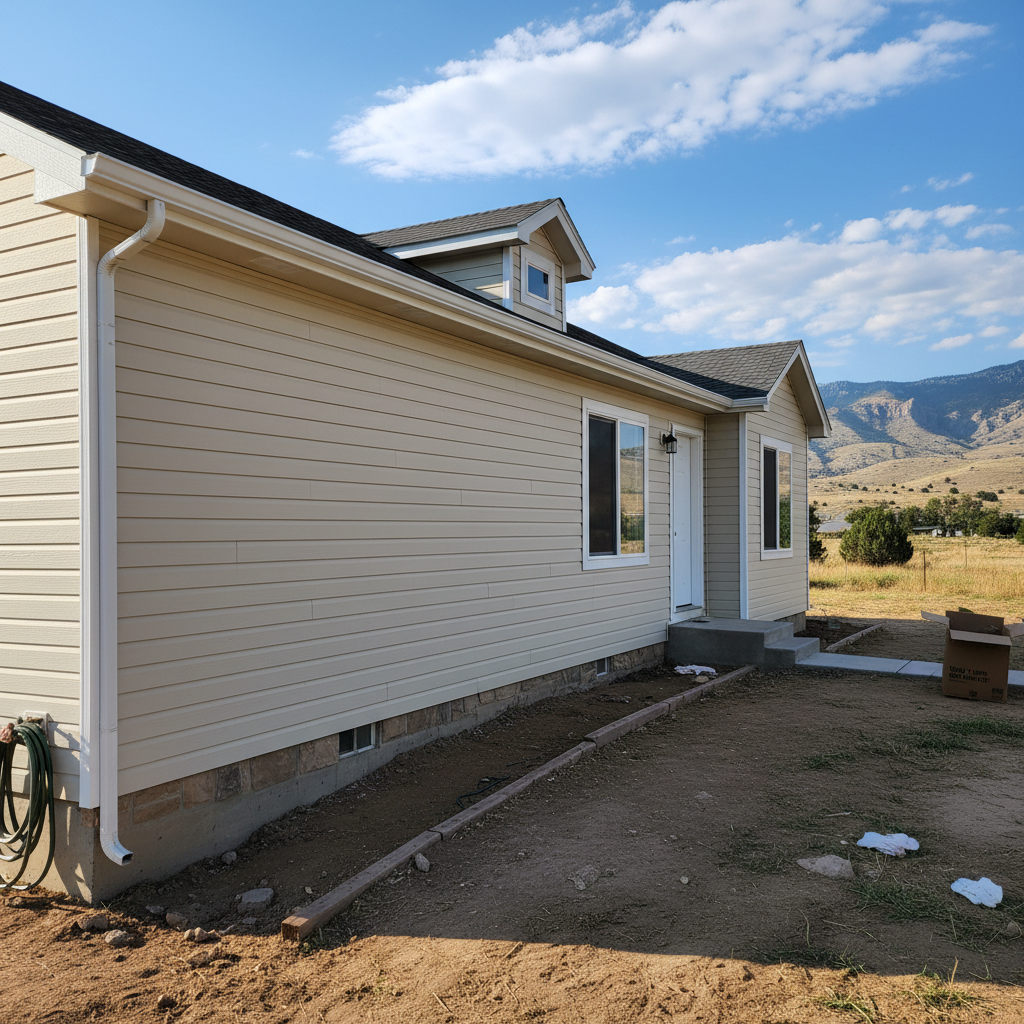
Alright, let's talk money. Specifically, what it's going to cost you to get new vinyl siding installed on your house here in Lehi. People ask me this all the time, and while every job really is unique, I can give you some solid numbers and tell you what factors tend to push the price up or down. No fluff, just the facts.
What Makes Vinyl Siding Cost What It Does?
You'd think it'd be simple, right? Just a price per square foot. But it's not quite that straightforward. Here's what I look at when I'm putting together a bid:
- Your Home's Size and Shape: This is the big one. More square footage means more material and more labor. But it's not just the total surface area; a simple rectangular house is way easier and faster to side than one with lots of gables, bump-outs, and complex angles. Each of those corners and jogs takes extra time and precision.
- Siding Quality and Style: Not all vinyl siding is created equal, you know? You've got your basic builder-grade stuff, which is thinner and cheaper, all the way up to premium, thicker panels that offer better insulation and more realistic wood grain textures. Colors can also play a role; custom or darker colors sometimes cost a bit more.
- Existing Siding Removal: Are we going over your old siding, or are we tearing it all off? If we're removing old stuff, especially if it's multiple layers or something like asbestos (which needs special handling), that adds to the labor and disposal costs. Most of the time, I recommend a full tear-off. That way, we can inspect the sheathing underneath and make sure everything's solid.
- Prep Work and Repairs: Once the old siding is off, we might find rotten sheathing, damaged flashing, or other issues that need fixing before the new siding goes on. This is an unknown until we get in there, but it's a common add-on.
- Trim, Soffit, and Fascia: Siding isn't just the flat panels. You've got to think about all the finishing touches around windows, doors, eaves, and corners. Aluminum or vinyl-wrapped trim work protects these areas and gives a clean, finished look. Naturally, the more windows and doors you have, the more trim work is involved.
- Insulation Needs: Some homeowners choose to add an insulating layer under the new vinyl siding, like rigid foam boards. This can really improve your home's energy efficiency, especially with our hot summers and cold winters here in Lehi, but it's an extra cost for materials and installation.
Typical Cost Ranges for Vinyl Siding in Lehi
Okay, let's get down to brass tacks. For a full vinyl siding replacement, including tear-off of existing siding, new vinyl siding, and basic trim work, you're generally looking at a range of $8 to $15 per square foot of installed siding surface. That's a pretty wide range, I know, but it covers the variables I just talked about.
So, for an average 2,000 square foot home (which might have around 1,500-1,800 square feet of actual siding surface, depending on windows and doors), you could be looking at anywhere from $12,000 to $27,000. A smaller, simpler home might be on the lower end, while a larger, more complex house with premium siding and extra insulation could easily hit the higher end or even exceed it.
Remember, these are rough estimates. Your specific quote will be tailored to your home.
What Should Be in Your Quote?
When I give you a quote at Classic Siding Inc, I make sure it's clear what you're getting. Here's what you should expect to see:
- Material Costs: This covers the vinyl siding panels themselves, starter strips, j-channels, soffit, fascia, and any other necessary components.
- Labor Costs: The crew's time for removal, installation, and cleanup.
- Disposal Fees: Hauling away the old siding and debris.
- Permits: In Lehi, you'll need a permit for siding replacement. A good contractor handles this for you.
- Warranty Information: Both for the materials and the workmanship.
What might NOT be included, and could be an add-on, are things like extensive structural repairs, major window or door replacements, or painting of non-sided elements like decks or porches. Always ask if you're unsure.
Don't Overpay: My Advice
You want a good job at a fair price, and I get that. Here's how to make sure you're not getting ripped off:
- Get Multiple Bids: Three is usually a good number. Don't just go with the cheapest; compare what each contractor is offering. Is one using higher-quality materials? Are they including things the others aren't?
- Check References and Reviews: A contractor's reputation speaks volumes. Ask for local references, check their online reviews. You want someone who's reliable and does quality work.
- Ask About Experience: How long have they been doing this? Do they specialize in siding? We've been working on homes from Traverse Mountain to the older parts of Main Street for years, so we know the local challenges.
- Understand the Warranty: A strong warranty on both materials and labor protects your investment. Make sure it's in writing.
- Don't Pay Everything Upfront: A reputable contractor will ask for a reasonable down payment, but the bulk of the payment should be due upon satisfactory completion of the work.
Replacing your siding is a big investment, but it's one that protects your home and boosts its curb appeal. Do your homework, ask the right questions, and you'll end up with a great result.