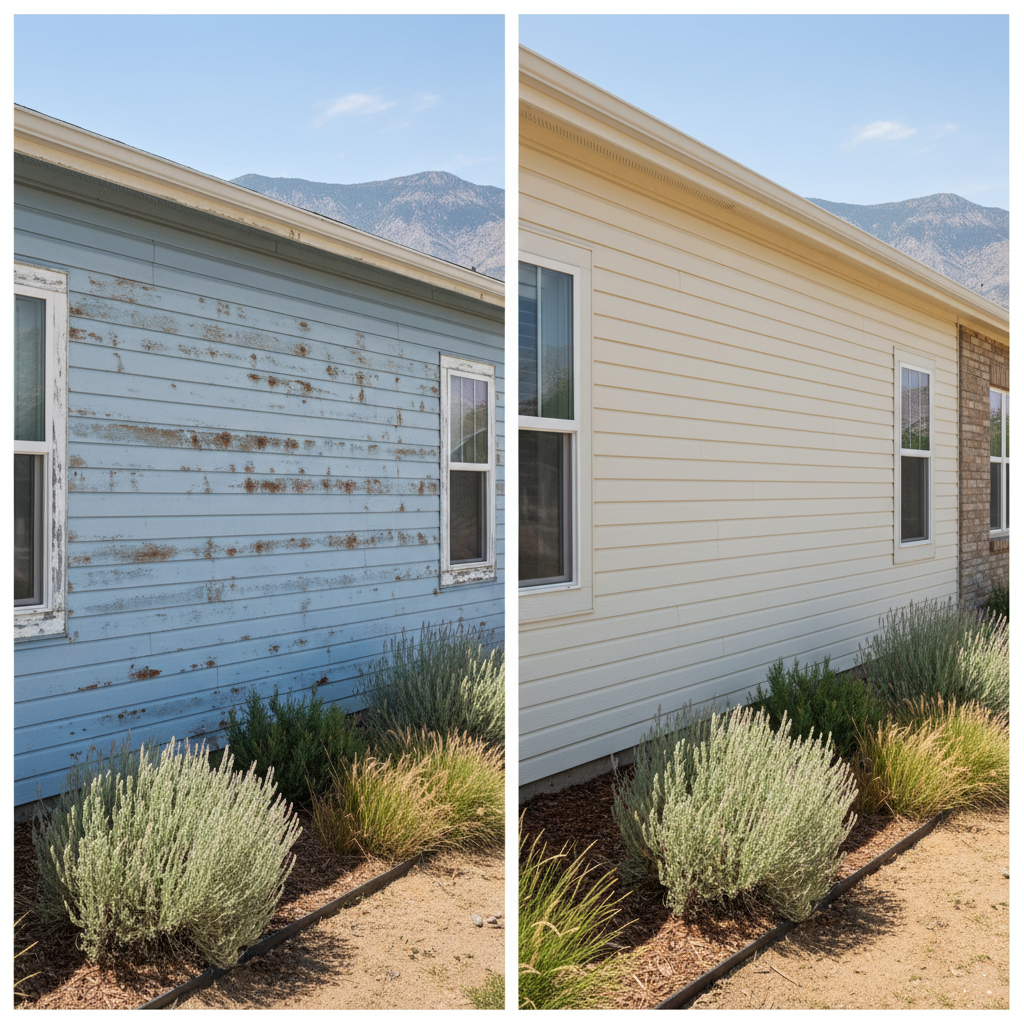
So, you're eyeing new vinyl siding for your place here in Lehi, right? Maybe the old stuff's just worn out, or you're simply fed up with painting. You've probably spent some time thinking about colors and panel styles, but have you considered how we'll finish off the corners and around your windows and doors? It seems like a small thing, but honestly, it makes a huge difference in how your house looks and how well that siding holds up.
When it comes to putting the finishing touches on vinyl siding, especially around corners and openings, we usually tackle it one of two ways: either we use J-channel everywhere, or we go with dedicated corner posts. Both methods get the job done, but they give you a pretty different end result. Let's chat about what I've seen work best for homes around here, especially with our wild weather.
All About J-Channel
J-channel is that handy trim piece that, well, looks like a 'J' when you see its side. Its whole purpose is to neatly hold the cut edge of a siding panel, giving you a clean finish and letting the siding expand and shrink as it needs to. It's pretty cheap and easy to put in, which is why it's a common choice, especially for folks doing it themselves or those on a tighter budget.
You can use J-channel to frame every window, door, and corner on your house. The siding panels just slide right into it. It's fast, it's efficient, and it works. But here's the thing: when you use J-channel on an outside corner, you end up with two pieces of J-channel meeting. That creates a rather narrow, sometimes sharp, edge. It can look a little thin or 'cut-off' compared to a proper corner post. And if it's not installed perfectly, you might spot tiny gaps or imperfections where those two J-channels butt up against each other.
For windows and doors, J-channel is almost always part of the plan. It's excellent for creating that crisp frame. But when it's used for *all* the corners, some homeowners feel it looks a bit too, shall we say, basic. It's not bad, it just doesn't have the same visual weight, you know?
The Dedicated Corner Post Approach
Now, let's switch gears to corner posts. These are trim pieces made specifically to wrap around the outside corners of your home. They're usually wider and more substantial than J-channel, giving your corners a much more finished, solid appearance. Think of it as a piece of trim that really defines the edge of your house, giving it some gravitas.
When we use corner posts, the siding panels slide into channels built right into the post itself. This makes for a really clean, continuous line from top to bottom. It's a more traditional look, and in my experience, it simply looks better on most homes. It adds a touch of architectural detail and makes the house feel more solid, more "built."
The downside? Corner posts cost a bit more than J-channel. That's true for both the material itself and sometimes for the installation, because they need a bit more precision to get them perfectly plumb and straight. But for the visual impact, I honestly think it's usually worth the extra money.
Cost, Durability, Maintenance, and Appearance
Let's break it all down:
- Cost: J-channel is cheaper, no question about it. If your budget is the absolute top priority, using J-channel for all corners will save you some cash on materials and labor.
- Durability: Both are tough vinyl products. However, a dedicated corner post gives you a more substantial edge. That means it can potentially handle minor bumps better than two thin pieces of J-channel meeting. Here in Lehi, with our occasional strong winds whipping through neighborhoods like Traverse Mountain, a more robust corner can be a small but meaningful advantage.
- Maintenance: Both are practically maintenance-free. Just a good wash now and then, really. No big difference here.
- Appearance: This is where you see the biggest contrast. J-channel corners can look a bit thin and less finished. Corner posts, though, provide a much more substantial, architectural, and generally higher-end look. They give your home a clean, crisp edge that really boosts its curb appeal.
My Recommendation for Lehi Homes
Alright, so what do I actually recommend? For most homeowners in Lehi, I'm going to lean heavily towards using dedicated corner posts. Seriously, it's a small upgrade that makes a huge difference in how your home looks overall.
Think about it: you're putting money into new siding. You want it to look fantastic and last for decades. Skimping on the corners is kind of like buying a really nice suit and then wearing cheap shoes with it. It just doesn't complete the picture. The extra cost for corner posts is usually pretty minimal in the grand scheme of a whole-house siding project, and the visual payoff is significant.
Here at Classic Siding Inc., we always talk through these options with our clients. We'll even show you examples of both so you can see the difference with your own eyes. We're not here to push things you don't need, but we are here to make sure you get the best possible outcome for your home. Getting the details right, like your corner trim, is what takes a good siding job and makes it a great one.